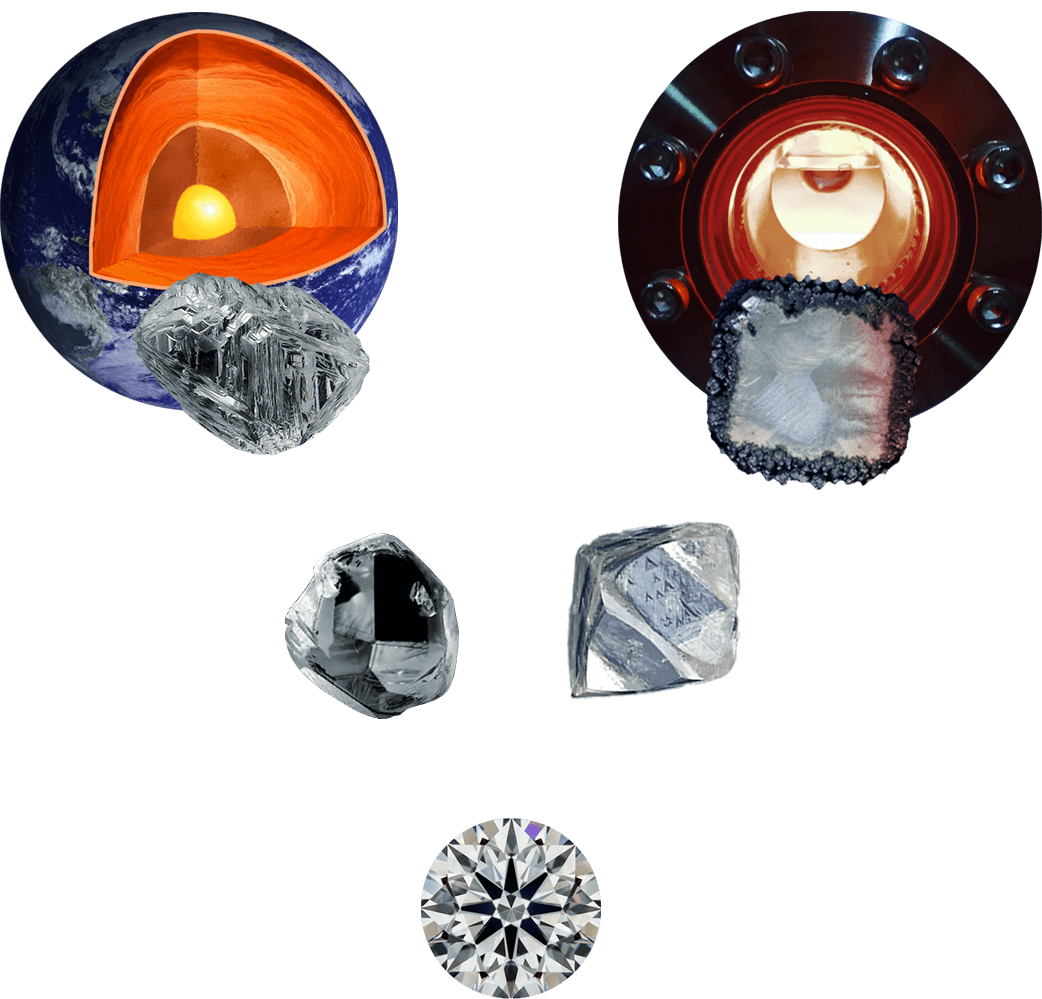

Lab-grown is as Real
as Earth-grown

Only one thing separates them: their birthplaces

A diamond is a diamond

What are labgrown diamonds?

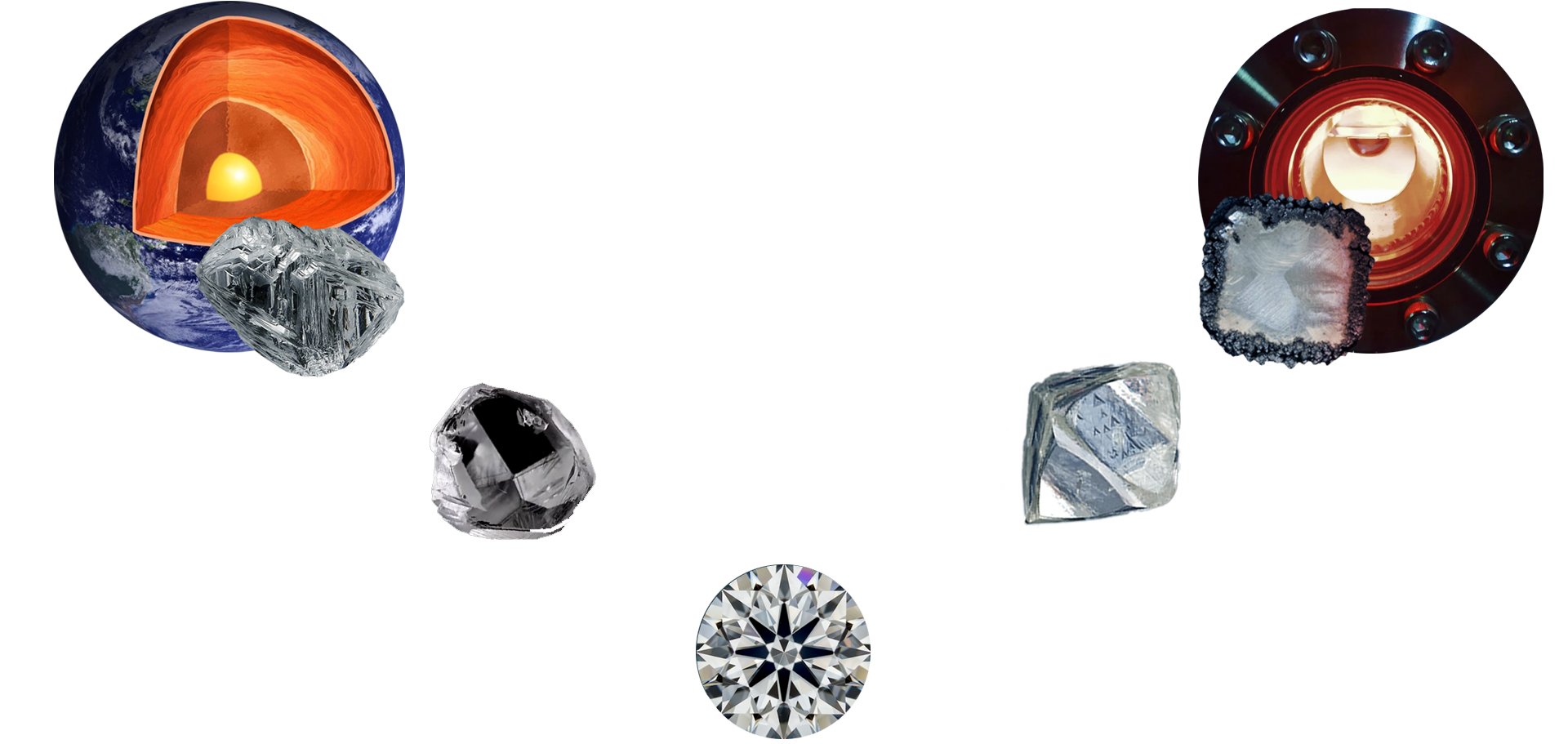
Know the reality of their journey
IT’S A DIAMOND

Tech specs comparison

PROPERTIES MINED DIAMOND LABGROWN DIAMOND DIFFERENCE
Chemical Composition 100% Carbon 100% Carbon NO
Reflective Rate 2.42 2.42 NO
Relative Diversity 3.52 3.52 NO
Colour Diffusion 0.044 0.044 NO
Hardness 90 GPA 90 GPA NO
Thermal Conductivity 2x10³ W/M/K 2x10³ W/M/K NO
Thermal Expansion 0.80 X 10.6K 0.80 X 10.6K NO
Transparency Deep UV To Far TR Deep UV To Far TR NO
Resistivity 1016 CHM-CM 1016 CHM-CM NO
Compressibility 8.3 X10-I3 M2/N 8.3 X10-I3 M2/N NO
THE EDUCATION CONTENT IS IN COLLABORATION WITH
INTERNATIONAL GEMOLOGICAL INSTITUTE (IGI)

How are they grown?

Let’s dig in!
Chemical Vapour
Deposition (CVD)
This is a method that uses moderate pressures and temperatures in a vacuum chamber, where diamonds are formed from hydrocarbon gas mixtures.
High pressure,
high temperature (HPHT)
One of the primary mechanical methods used to grow diamonds in a lab. During this process of diamond growth, carbon is exposed to extreme temperatures and pressures (replicating the extreme conditions deep within the earth where diamonds form naturally) in the presence of a diamond seed where the seed act as a template for a lattice of carbon to grow layer by layer.

From rough To rich

A journey of creating lab-glowing brilliance

Anatomy

Inside-Out of a Lab-grown Diamond

4 C’s

The parameters of a lab-grown masterpiece
Since diamonds form under extreme heat and pressure, internal and external characteristics are common. These characteristics help gemologists separate natural diamonds from synthetics and simulants, and identify individual stones.
The rarest and most expensive are diamonds in the colorless range graded D,E and F on a scale that descends to Z. Diamonds with more color than Z, or in other shades such as orange, pink, blue, etc. are classified as “Fancy Colored Diamonds” and are graded on the IGI Colored Diamond Report.
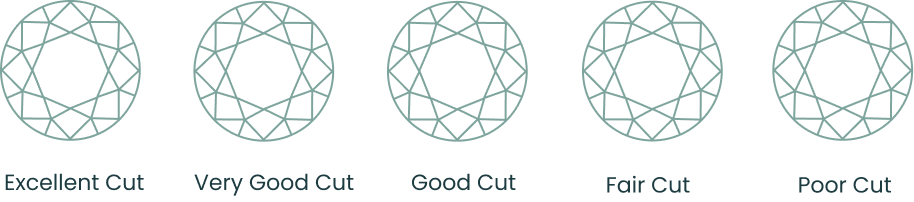
While nature determined the color and clarity of a natural diamond, man is responsible for the cut quality which brings it to life. The planning, proportions, cutting precision and details of finish determine how brilliant, dispersive and scintillating the diamond will be.
The weight or size of a diamond is measured in carats (ct.).One carat weighs 1/5 of a gram and is divided into 100 points, so a diamond weighing 1.07 ct. is referred to as “one carat and seven points.

Fancy shapes

Brilliance in varied shapes
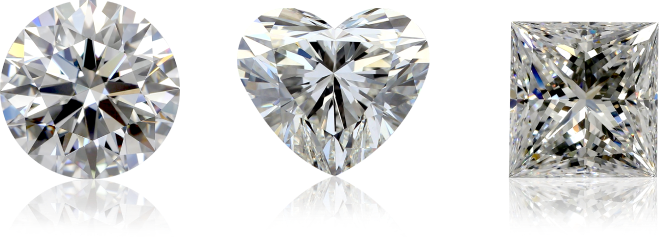
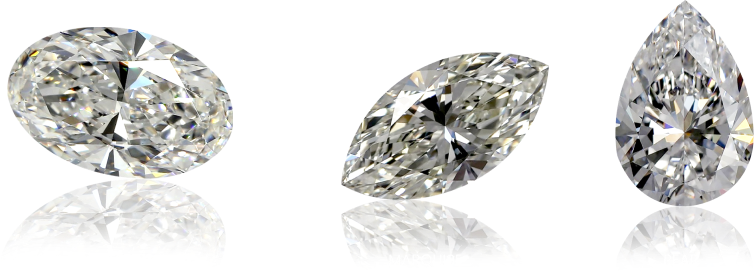
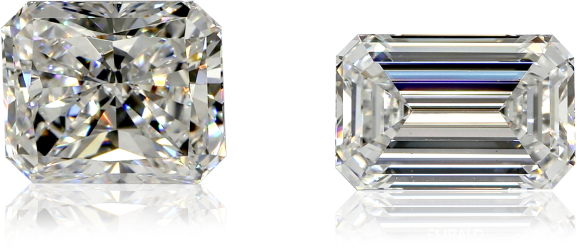
In diamonds, shape refers to the overall silhouette of the stone. Round, Oval, Princess, Emerald, Cushion, Heart, Marquise, Asscher, Pear, Trapeze and Baguette – a collection of the most desired fancy shapes.

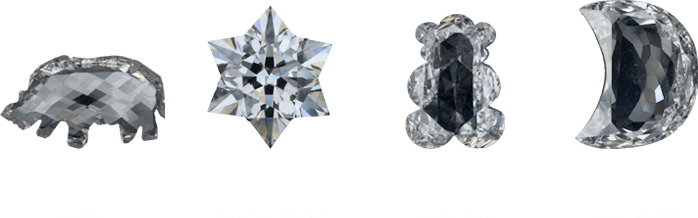
Special & Modified Cuts

SETTING THE BAR HIGH
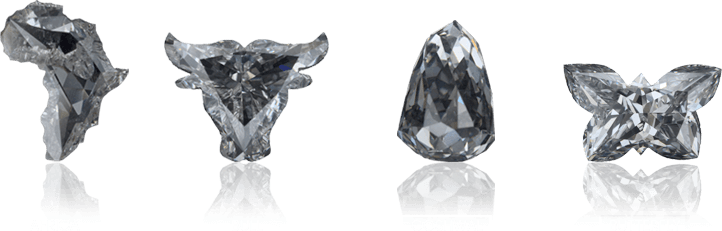
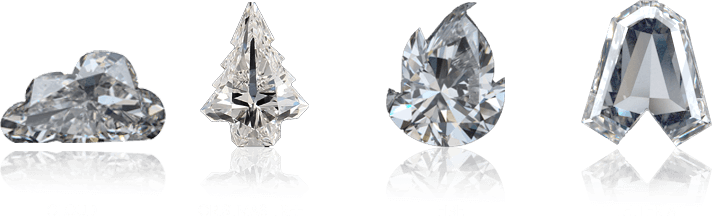
With Lab Grown Diamonds the possibilities become endless as it is easier for us to experiment with lab grown rough compared to natural rough diamonds. Since we cut and polish the diamonds ourselves, our advanced technology and knowledge enables us to design and cut diamonds to almost any shape or size that you can think of! Below are a few exciting and interesting examples of the diamonds that we have crafted!

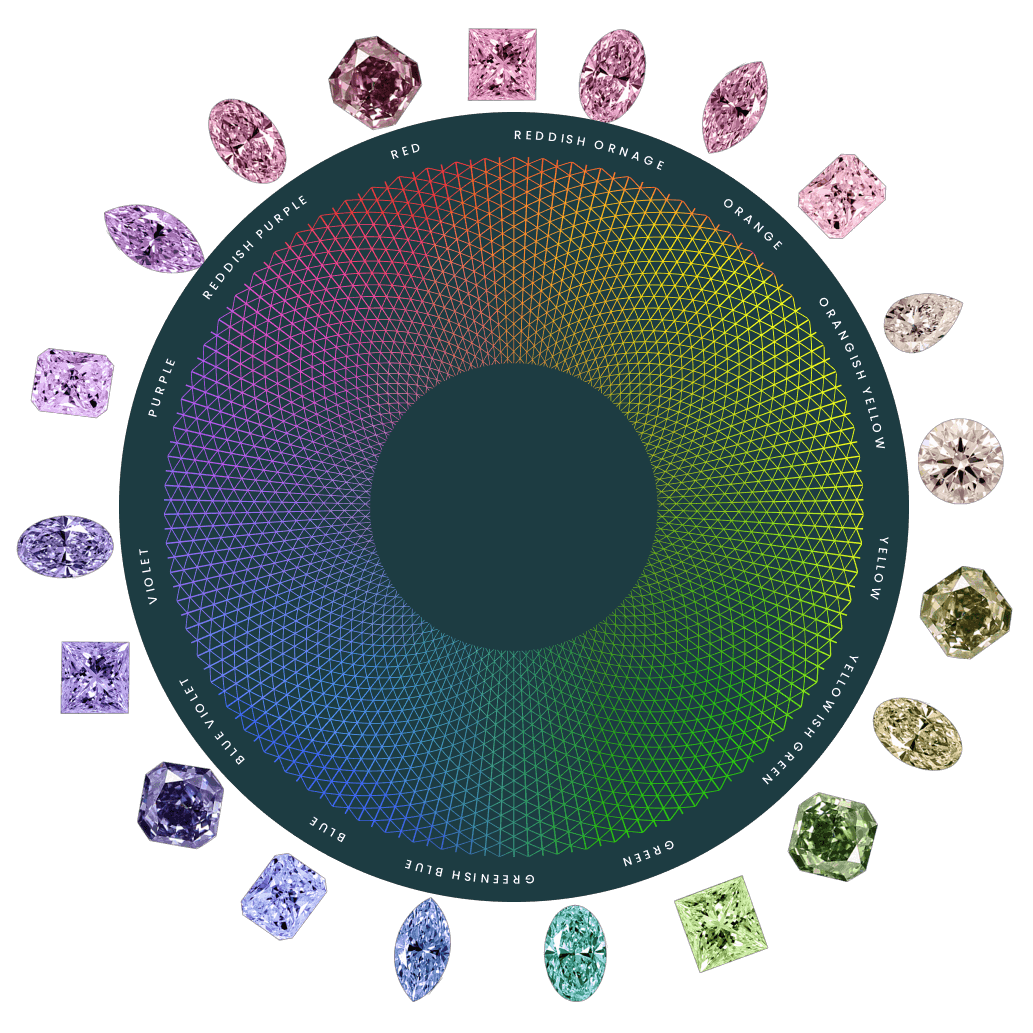
Fancy color

Brilliance in diverse hues
Diamonds in the normal colour range are colourless through light yellow and are described using the industry’s D to Z colour grading scale. Fancy colour diamonds, on the other hand, are yellow and brown diamonds that exhibit any other colour face up of the spectrum (blue, green, pink, and red).

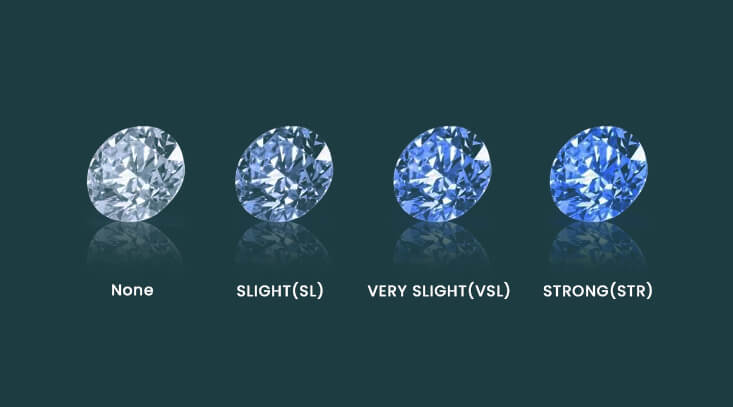
What is a fluorescent diamond?

Fluorescence is a form of energy. It is the property that certain substances, or minerals, like diamonds may have, to emit visible light when submitted to ultraviolet- or X-rays. Colorless diamonds with blue fluorescence are called “Jager”. Light yellow diamonds with an intense blue fluorescence are called “Premier”. These ancient names refer to the average quality of diamonds, extracted from the Jagersfontein mine and the Premier mine in South Africa. I.G.I. compares the fluorescence of diamonds, to a series of comparison stones and evaluates the intensity of that fluorescence.
There are four different degrees:
Very Slight (VSL), Slight (SL), Strong (STR) , Fluorescence None

What are type I and type II diamonds

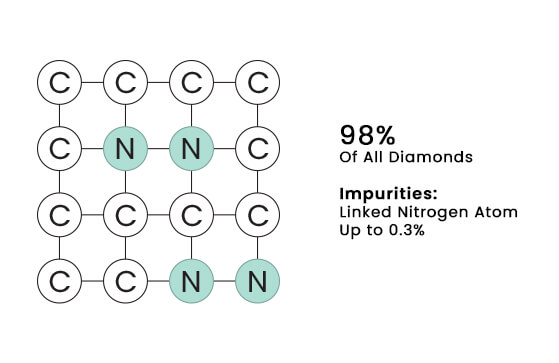
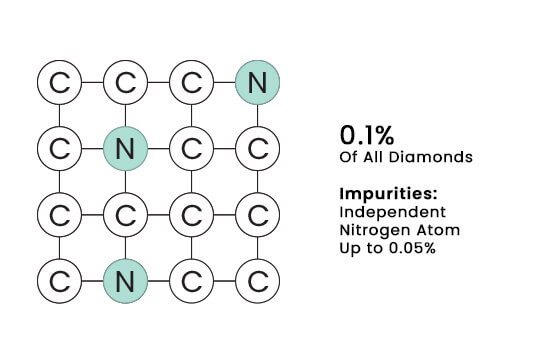
Type I diamonds, the most common class, contain nitrogen atoms as their main impurity, commonly at a concentration of 0.1%. Type I diamonds absorb in both the infrared and ultraviolet region, from 320 nm. They also have a characteristic fluorescence and visible absorption spectrum.

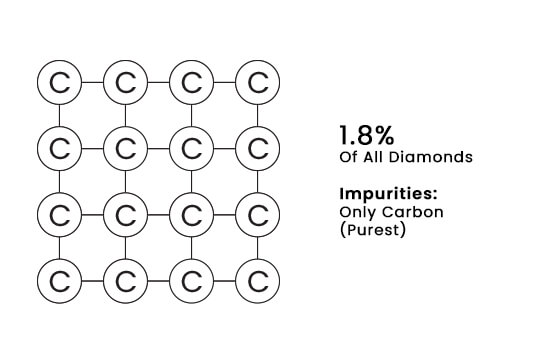
Type II diamonds have no measurable nitrogen impurities. Type II diamonds absorb in a different region of the infrared, and transmit in the ultraviolet below 225 nm, unlike Type I diamonds. They also have differing fluorescence characteristics. The crystals as found tend to be large and irregular in shape. Type II diamonds were formed under extremely high pressure for longer time periods.
TYPE I DIAMONDS
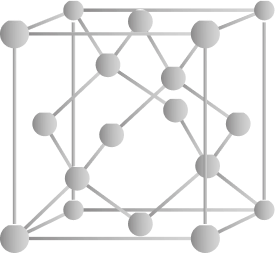
These diamonds are considered to be e ‘cape’ stones. The majority of diamonds that have been discovered until now fall into this classification. Diamonds of this type have nitrogen atoms that stick together, forming tiny groups or clusters, which bond with the carbon atoms. The nitrogen atoms are responsible for absorbing wavelengths in the violet range of the visible light spectrum, which in turn allows these diamonds to have a yellow appearance.
These diamonds have single nitrogen replacement, which means that a single nitrogen atom is occupies a position normally meant for a carbon atom within the crystal’s lattice. The isolated nitrogen atoms continuously absorb the green to violet range of the visible light spectrum, and creates color in the diamond that varies from yellow, to yellow-orange, to orange, to brown. The fancy intense yellows of this type are the rarest.
TYPE II DIAMONDS

By chemical analysis these diamonds are the purest of all, as they are mostly made of carbon. Very often they have a colorless appearance, because their atomic structures are devoid of any substantial chemical elements that may affect its body color. If they are distorted while being formed, they may take on a dirty yellow, brown, slightly pinkish or violetish appearance due to impurities being trapped within their growth planes.

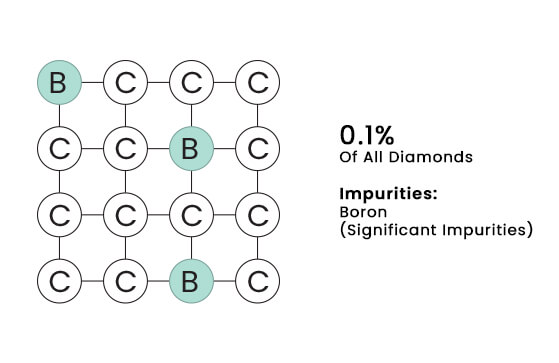
Type IIb diamonds make up about 0.1% of all natural diamonds, making them one of the rarest natural diamonds and very valuable. In addition to having very low levels of nitrogen impurities comparable to Type IIa diamonds, Type IIb diamonds contain significant boron impurities. The absorption spectrum of boron causes these gems to absorb red, orange, and yellow light, lending Type IIb diamonds a light blue or grey color

Grading & Certifications

Certified to be brilliant
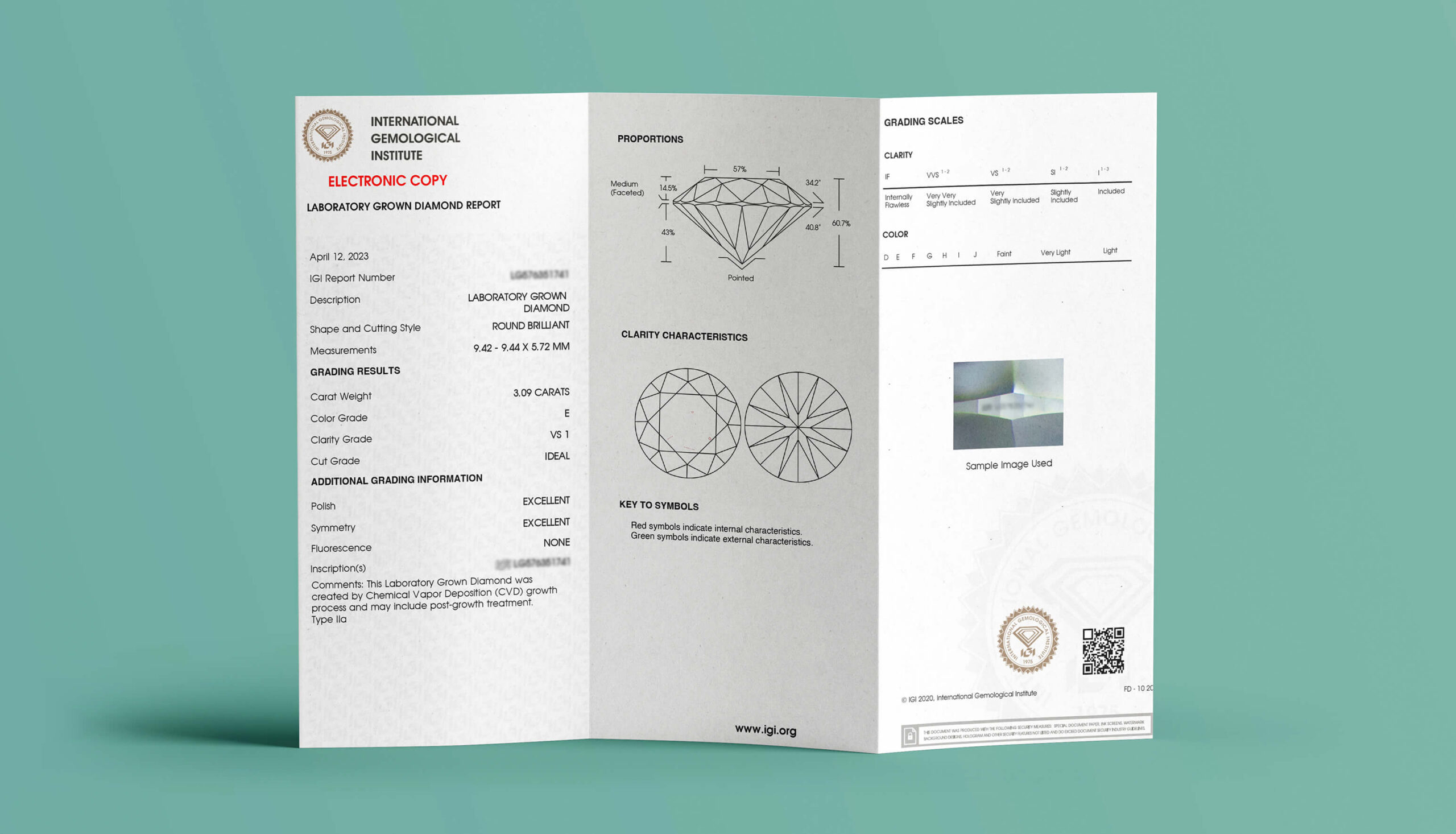
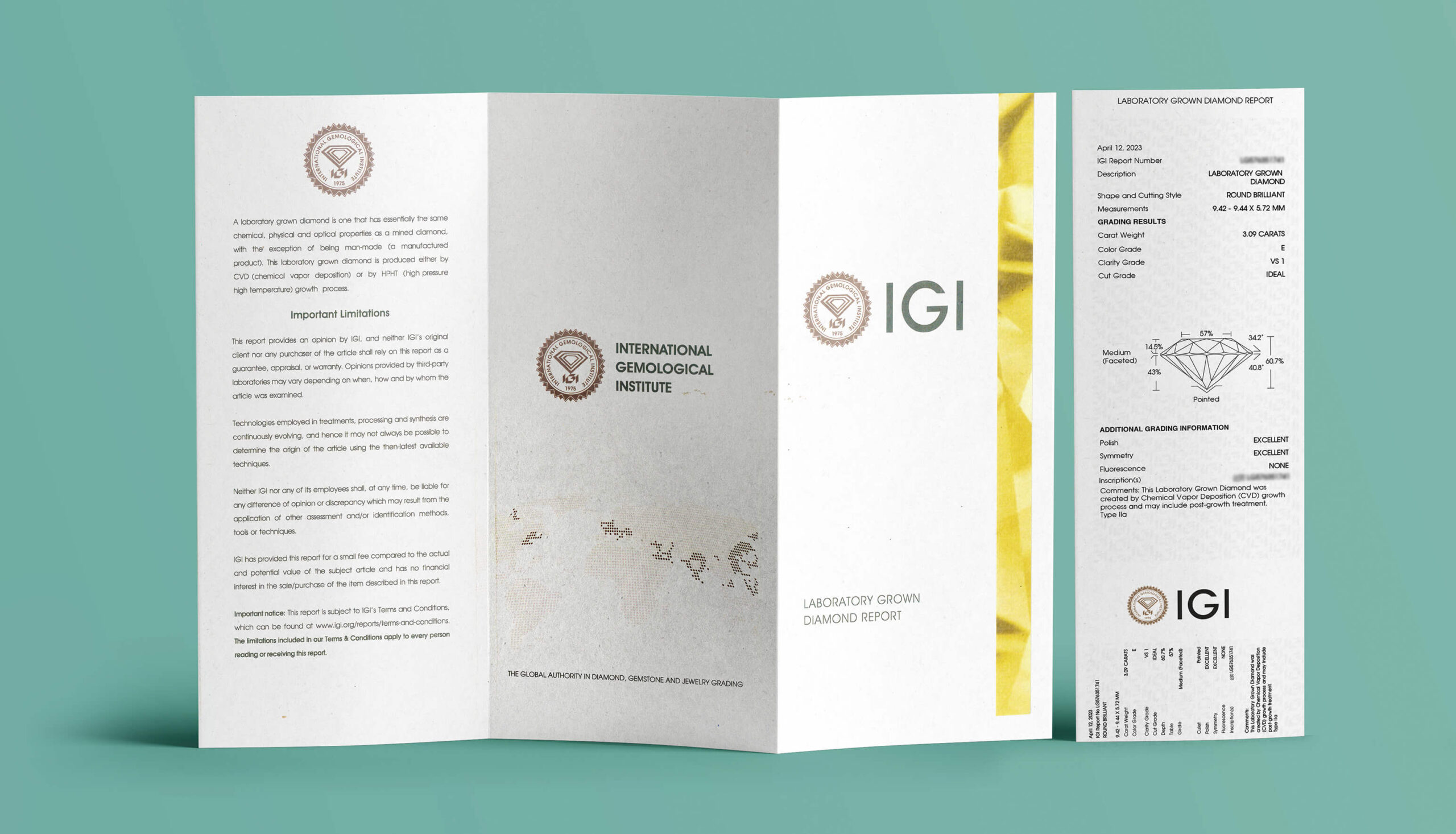
Once the diamond’s 4 C’s have been assessed by qualified gemmologists, they register this information in a diamond grading report. Lab-grown diamonds are graded to the same standard by leading independent gemmological laboratories such as IGI, GIA etc. A diamond certificate will have diamond grading listed alongside other pertinent information describing the diamond.

Jewellery Guide

Aspire the infinite possibilities
Gem-quality diamonds are meant for adornment. Jewellery is made from a variety of metals and almost all diamonds are set in it, so they can be worn in many different ways. Gold and silver are the most common metals that use change they are highly malleable, i.e., we can change shapes and forms very easily.

Frequently Asked Questions

About Lab Grown Diamonds

The only thing that makes a lab-grown diamond different from a natural diamond is its origin. A lab-created diamond is “grown” inside a laboratory using cutting-edge technology which replicates the natural diamond creation process that happens under the earth’s surface.

Lab-grown diamonds have the same physical and chemical properties that of a mined diamond. Both lab-grown diamonds and mined diamonds are 100% carbon in its composition.
Lab-grown diamonds are grown via two processes – one being the High Pressure-High Temperature (HPHT) and the other being Chemical Vapor Deposition (CVD).
An HPHT diamond begins as a small diamond seed that is placed into carbon. The seed is then exposed to temperatures of about 1500 C degrees and pressurized to approximately 1.5 million pounds per square inch. The pure carbon melts and starts to form a diamond around the starter seed. It is then carefully cooled to form a pure carbon diamond.
A CVD diamond begins as a thin slice of diamond seed, placed in a chamber filled with carbon rich-gas and heated to around 800 C degrees. The gases that are ionized breaks the molecular bonds in the gases and the pure carbon adheres to the diamond.
Lab-grown diamonds are graded and certified using the same process as mined diamonds. Diamonds are sent to a laboratory that specializes in grading diamonds. The majority of these laboratories grade using the 4C’s criteria (Cut, Clarity, Color and Carat). IGI was the first gemological institute to begin with grading of lab-grown diamonds in 2005. Today, IGI has more experience and expertise than any other organization in the lab-grown certification arena, instilling confidence in lab-grown diamond grading in the industry – from the manufacturers and retailers to the end consumers.

Laboratory grown diamonds cannot be identified by a naked eye. Even trained gemologists can’t tell the difference with naked eye. Hence, it is always advisable to buy certified diamonds.

Laboratory grown diamonds are easily appraised and insured.

Clarity

Clarity

Since diamonds form under extreme heat and pressure, internal and external characteristics are common. These characteristics help gemologists separate natural diamonds from synthetics and simulants, and identify individual stones.
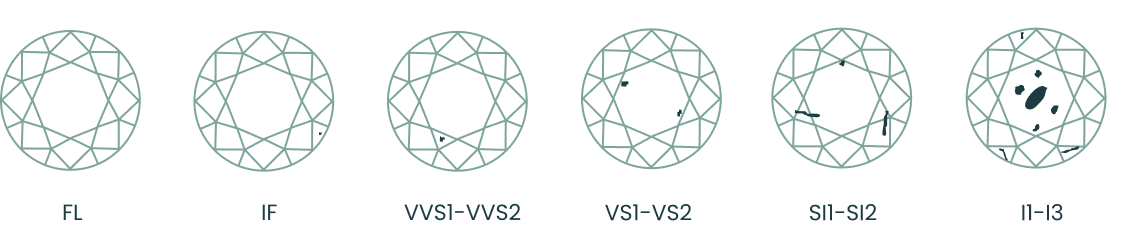
There are two types of clarity characteristics: inclusions and blemishes. In order to grade the clarity of a diamond, it is necessary to observe the number and nature of external and internal characteristics of the stone, as well as their size and position. The difference is based on their locations: inclusions are enclosed within a diamond, while blemishes are external characteristics. IGI grading reports show plotted diagrams of clarity characteristics marked in red for internal and green for external features.
  • FL Flawless (FL) No internal & external inclusions and no blemishes visible under 10x magnification
    IF Internally Flawless (IF) No inclusions visible under 10x magnification
    VVS1-VVS2 Very, Very Slightly Included (VVS1 and VVS2) Inclusions so slight they are difficult for a skilled grader to see under 10x magnification
  • VS1-VS2 Very Slightly Included (VS1 and VS2) Inclusions are observed with effort under 10x magnification, but can be characterized as minor
    SI1-SI2 Slightly Included (SI1 and SI2) Inclusions are noticeable under 10x magnification
    I1-I3 Included (I1, I2, and I3) Inclusions are obvious under 10x magnification which may affect transparency and brilliance

Color

Color

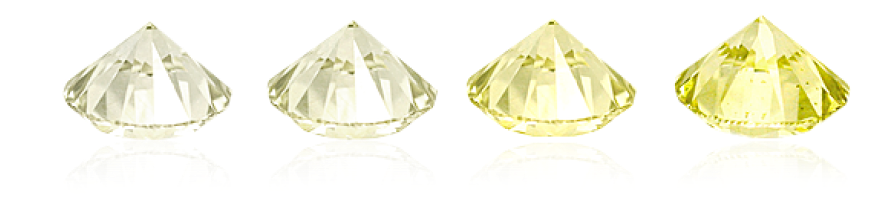
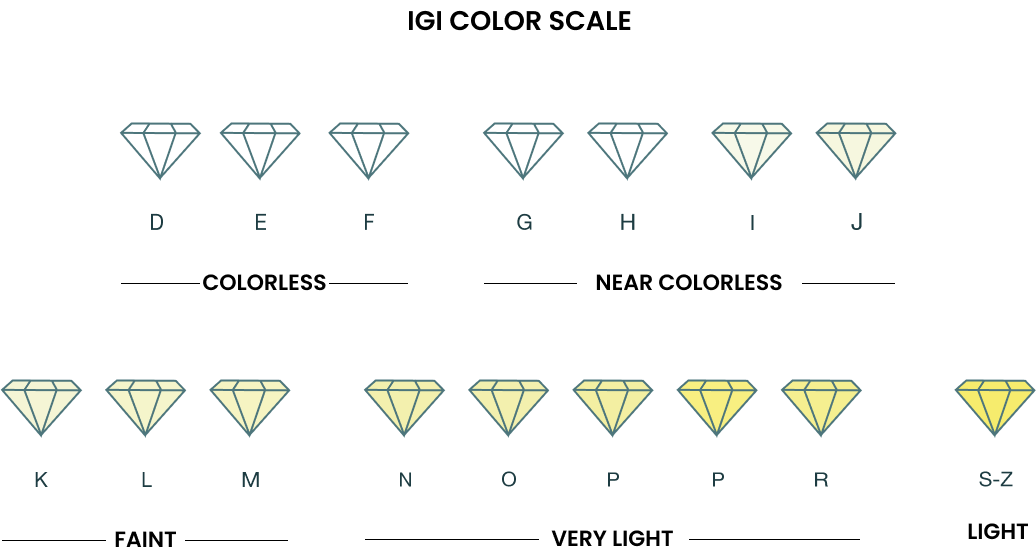
Most diamonds of gem quality used in jewelry vary in shade from completely colorless down to a visible yellow or brown tint.
The rarest and most expensive are diamonds in the colorless range graded D,E and F on a scale that descends to Z. Diamonds with more color than Z, or in other shades such as orange, pink, blue, etc. are classified as “Fancy Colored Diamonds” and are graded on the IGI Colored Diamond Report.
To determine the correct color, all submitted diamonds are compared to an internationally accepted master set of stones, the colors of which range from D, or colorless (the most sought after) to Z, the most yellow/brown – aside from “fancy” yellow or brown.
Color

Cut

Cut

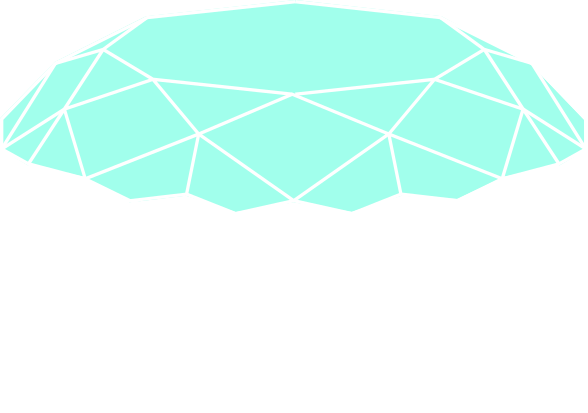
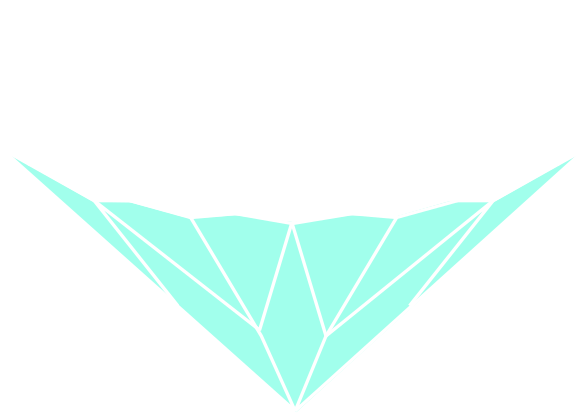
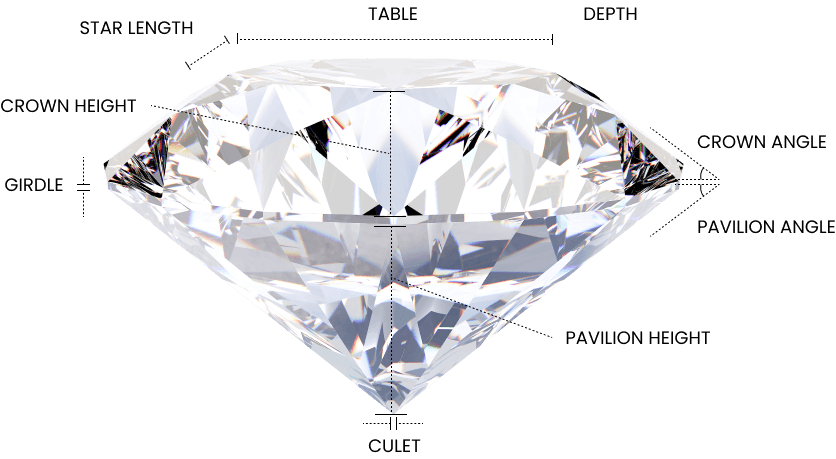
While nature determined the color and clarity of a natural diamond, man is responsible for the cut quality which brings it to life. The planning, proportions, cutting precision and details of finish determine how brilliant, dispersive and scintillating the diamond will be. If the cutting factors under man’s control are not optimized, the appearance of the diamond can be adversely affected.
Diamond faceting has changed over time, particularly as lighting has evolved. There are many shapes and cutting styles, each with different visual properties. The most popular diamond in the age of modern electric lighting is the Round Brilliant.
Cut

Carat

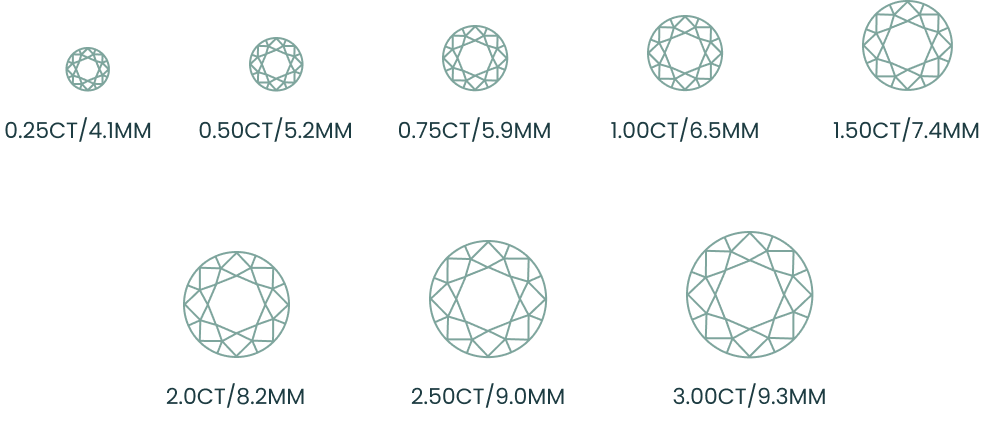
The weight or size of a diamond is measured in carats (ct.).One carat weighs 1/5 of a gram and is divided into 100 points, so a diamond weighing 1.07 ct. is referred to as “one carat and seven points.”For example,

  • 0.75 carat = 75 points
  • 1/2 carat = 50 points
  • 1/4 carat = 25 points

With an accuracy of 1/100,000 carat, the IGI scales provide a highly precise diamond weight, down to the hundredth or thousandth of a carat.It is important to note that diamonds of the same weight don’t necessarily have the same size appearance. Those cut too shallow or deep may look small for their weight, or suffer in brilliance. As a reference, IGI recommends the following vertical spreads for round brilliant diamonds.
When diamonds are mined, large gems are discovered much less frequently than small ones, which make large diamonds much more valuable.Diamond prices rise exponentially with carat weight. So, a 2-carat diamond of a given quality is always worth more than two 1-carat diamonds of the same quality.
Carat